
Operators: 3 Tech Ready Checks to Cut Refrigeration Downtime
A practical daily to annual checklist for operators and technicians. Prioritize three checks, log readings and photos, and schedule tech PMs to cut...
The fastest way to stop spoilage and emergency service calls is a frequency-based preventive maintenance checklist: daily, weekly, monthly, quarterly, annual. Right now, prioritize three things: check and log temperatures, clear condensate drains, and clean condenser coils. Refrigerant readings and most electrical diagnostics belong to a certified technician, not your on-site staff.
TL;DR:
- Regular daily and weekly checks can identify early signs of refrigeration issues, such as temperature fluctuations, gasket leaks, and unusual noises, preventing major failures.
- Monthly inspections focus on cleaning coils, checking fans, and flushing drain lines, which are critical for optimal airflow and heat transfer.
- Quarterly electrical spot checks and deeper coil cleanings help extend equipment life and avoid quiet failures due to dust and grease buildup.
- Biannual refrigerant diagnostics and compressor inspections are necessary for maintain proper efficiency and detecting leaks before damage occurs.
- Maintaining thorough records and following strict safety procedures, including lockout/tagout and documentation, are essential for warranty protection and compliance.
Table of Contents
- What Should Be On a Refrigeration Preventive Maintenance Checklist?
- What Daily and Weekly Checks Catch Problems Early?
- What Do Monthly and Quarterly Inspections Cover?
- What Should a Certified Technician Check Twice a Year?
- What Safety Steps and Records Protect Your Warranty?
- What Warning Signs Mean You Need a Technician Now?
- Why Written PM Plans and Digital Checklists Actually Reduce Downtime
- How Conexcool Supports Your Preventive Maintenance Plan
- Sources
What Should Be On a Refrigeration Preventive Maintenance Checklist?
A working checklist gets organized by how often each task needs doing, not by which piece of equipment it touches. That structure matters because it tells you at a glance what your team handles today versus what needs a scheduled technician visit next quarter.
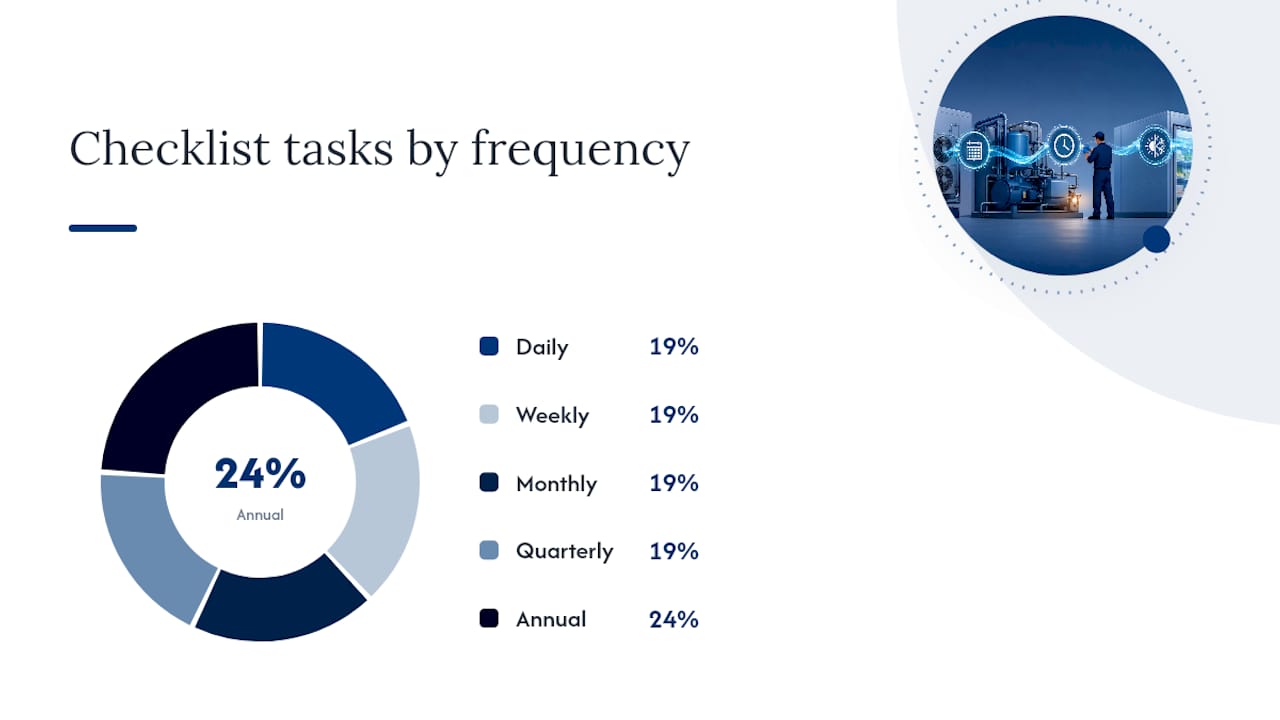
A technician-friendly commercial refrigeration maintenance checklist typically covers five fields no matter who fills it out: unit ID, location, technician or staff name, date and time, and the temperature reading at time of check. Add an immediate status flag, operational, needs attention, or urgent, and you have a form that any shift lead can complete in under two minutes.
Here’s the breakdown your staff can use starting today:
- Daily: Log temperatures per shift, inspect door gaskets, listen for odd compressor noise
- Weekly: Check evaporator area cleanliness, inspect condensate pans, verify hinges and latches
- Monthly: Clean condenser coils, inspect fan blades and motors, flush drain lines
- Quarterly: Electrical spot checks, contactor inspection, deeper coil cleaning in dirty environments
- Annual: Refrigerant diagnostics, compressor inspection, defrost system testing, full electrical audit
Operators handle daily and weekly items safely on their own. Monthly electrical checks and anything touching refrigerant circuits require a qualified technician, both for safety and for EPA compliance.
What Daily and Weekly Checks Catch Problems Early?
Your on-site staff are your early warning system. Most refrigeration failures give off signals days before the unit actually fails, and the staff standing next to the box every shift are the ones positioned to catch them.
Here’s what belongs in the daily and weekly rotation:
- Log temperature at least once daily. Daily temperature logging is a frontline defense against spoilage and, for many foodservice operations, a required operational control. Check thermostat calibration against a separate thermometer monthly.
- Inspect door gaskets, hinges, and latches. Run a hand along the gasket seam. Cold air leaking out means warm, humid air leaking in, and that means frost buildup and higher run time.
- Look and listen. Unusual vibration, a burning smell, or a compressor that cycles more than usual are all signs worth writing down, even if nothing looks broken yet.
- Check the evaporator area and condensate pan. Standing water or slow drainage in the pan is often the first visible sign of a clogged drain line, long before it turns into a puddle on the floor.
Pro Tip: Keep a small notepad or digital form right at the unit. Staff who have to walk to an office to log a reading skip it half the time. Staff who can log it in ten seconds on the spot actually do it.
What Do Monthly and Quarterly Inspections Cover?
Monthly and quarterly work is where airflow and heat transfer get protected. Skip this tier and coils clog, fans strain, and compressors work harder than they should, quietly burning through their service life.
- Clean condenser and evaporator coils. Dust and grease block airflow across the coil surface, which forces the compressor to run longer to hit the same setpoint. Kitchens and loading docks need monthly cleaning; cleaner environments can often stretch to quarterly.
- Inspect fan blades and motors. Look for cracked blades, bent housings, or bearings that feel loose when you spin the blade by hand. A vibrating fan motor rarely fixes itself.
- Flush drain lines and verify heater tape. In freezer units, heater tape prevents ice buildup in the drain line, and a failed heater tape is a routine cause of ice dams and water damage that shows up weeks after the actual failure.
- Run electrical spot checks. A technician-level electrical audit tightens loose connections and inspects contactors for pitting or burn marks, early signs of a failure that hasn’t happened yet.
What Should a Certified Technician Check Twice a Year?
Some tasks require tools and training your on-site staff don’t have, and shouldn’t be expected to have. These are the visits worth scheduling on the calendar rather than reacting to.
- Refrigerant diagnostics. Suction and head pressure, superheat, and subcooling readings tell a technician whether the refrigerant charge and airflow are balanced. Leak detection belongs here too, since a slow leak can run for months before temperatures drift.
- Compressor inspection and amp draw. Rising amp draw or intermittent cycling often shows up before a compressor fails outright, which is exactly why baseline readings from a prior visit matter for catching the trend.
- Defrost system testing and sensor calibration. A defrost cycle that runs too long or not at all wastes energy or lets frost build past the point the coil can clear on its own.
- Lifecycle parts and full performance testing. Belts, seals, and contactors have a service life. Replacing them on schedule, rather than after they fail, is what a real preventive maintenance plan is actually for.
What Safety Steps and Records Protect Your Warranty?
Two things separate a maintenance program that holds up under audit or warranty dispute from one that doesn’t: safety discipline and paperwork.
- Lock out and tag out before any electrical work or compressor inspection. No exceptions, regardless of how routine the task looks.
- Record equipment ID, serial number, refrigerant type, all readings, and a technician signature on every visit.
- Log refrigerant added or recovered. EPA Title VI places direct obligations on refrigerant handling and disposal, and your log is the record that proves compliance.
Photo-enabled digital checklists have mostly replaced paper forms for a practical reason: timestamped readings and images cut down on administrative disputes when a warranty claim or a compliance question comes up months later.
What Warning Signs Mean You Need a Technician Now?
Some symptoms mean you have time to schedule a visit. Others mean you need someone on-site today.
- Rapid temperature rise that doesn’t respond to a setpoint check
- Oil stains around fittings, a common tell for a slow refrigerant leak
- Heavy frost buildup on the evaporator coil, especially outside a normal defrost cycle
- Loud vibration or a compressor that trips its safety switch repeatedly
Before you call, run a quick triage: confirm power and setpoints, check that airflow around the condenser isn’t blocked, inspect the drain and pan for standing water, and listen to the compressor for grinding or knocking. Move product to backup cold storage if the unit can’t hold temperature, and note the exact readings you saw for the technician who responds.
Pro Tip: Write down the exact temperature and the time it started climbing. A technician arriving with a real timeline diagnoses the problem faster than one starting from scratch.
Why Written PM Plans and Digital Checklists Actually Reduce Downtime
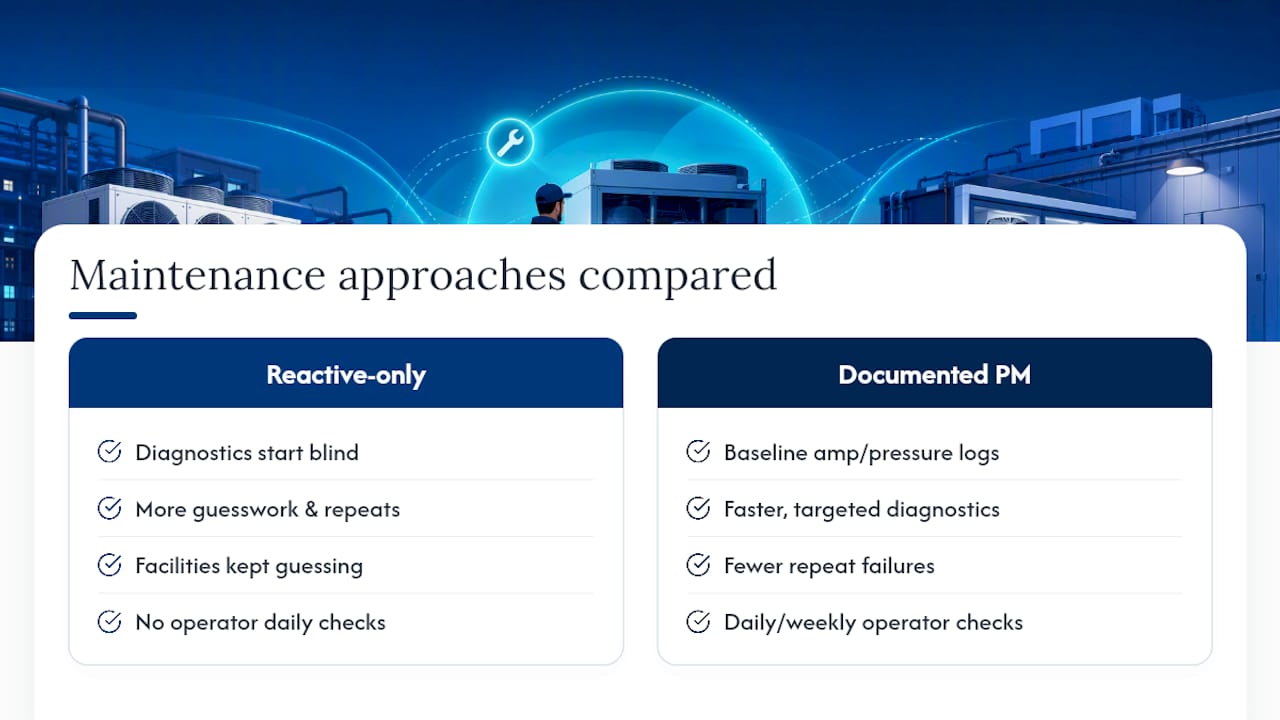
Documented PM visits speed up diagnostics because a technician walking into a unit with a history of amp draw readings and pressure logs isn’t starting blind. They’re comparing today’s numbers against a baseline, which cuts guesswork and repeat failures.
That’s the pattern we see across the fleets and cold storage operators Conexcool works with. Our 24/7 dispatch model in California, backed by a vetted technician network in other states, exists because reactive-only maintenance keeps facilities guessing. Pair your operator-level daily and weekly checks with a scheduled professional PM visit, and consider Conexcool’s reefer pre-trip inspection checklist as a model for how documented readings should look.
— Vitali
How Conexcool Supports Your Preventive Maintenance Plan
Your team can handle the daily gasket checks and drain inspections. Refrigerant diagnostics, compressor amp draw readings, and full electrical audits are tasks that catch a failing compressor months before it strands a load and are best handled by a scheduled technician visit.
Conexcool’s commercial refrigeration repair service covers both scheduled preventive maintenance and emergency response, with documented service reports that give you the readings and photo evidence your checklist needs for warranty and audit purposes. That documentation is the same evidence a technician uses on the next visit to catch a trend before it becomes a breakdown. Whether you’re running walk-in coolers, cold rooms, or a fleet of reefer containers on Daikin, Thermo King, or Carrier Transicold equipment, a technician working from your PM history diagnoses faster and fixes it right the first time. Schedule a service visit and get your semiannual or annual technical checks on the calendar before the next warning sign shows up on your daily log.
Sources
- Ozone protection under Title VI of the Clean Air Act | US EPA
- Commercial refrigeration maintenance checklist: Free PDF download | ServiceTitan
- Preventive Maintenance Checklist 3.26a (RDT PDF)
- Ice machine and walk-in box maintenance guidance | UNLV