
Facility Managers: Walk In Cooler Maintenance, 35–38°F Targets
Audit ready maintenance for facility managers: twice-daily temperature logs, monthly coil and drain care, gasket checks, and clear thresholds for when to...
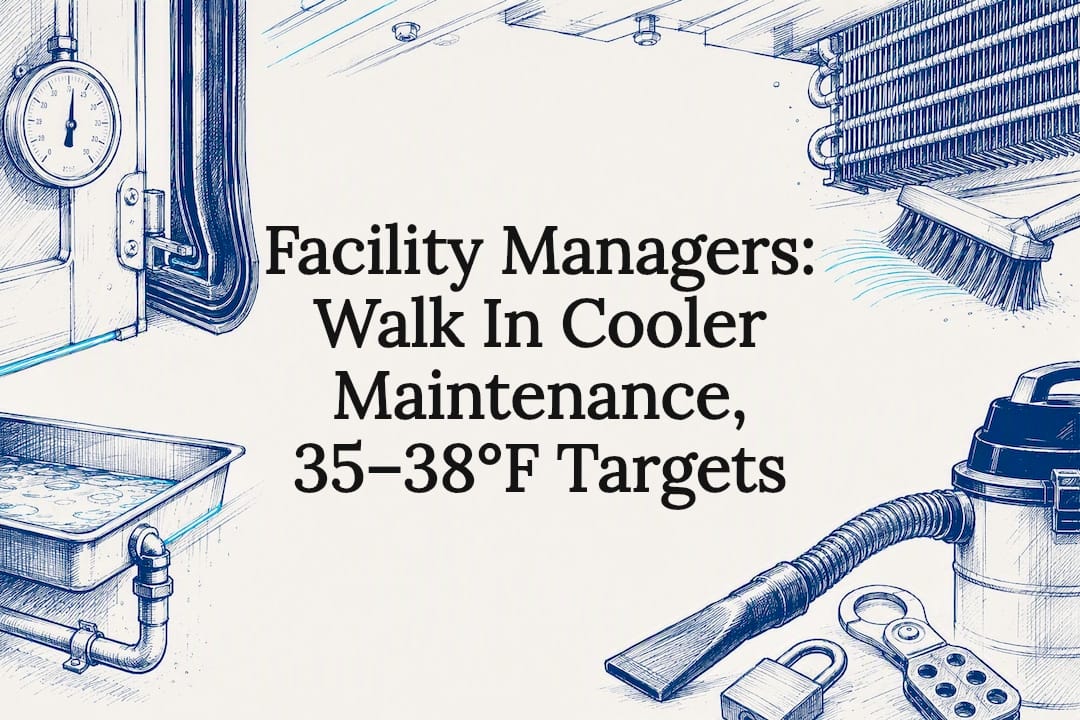
The routine that keeps a walk-in reliable is simple: log temperatures twice daily, check door gaskets weekly, clean condenser and evaporator coils monthly, and bring in a licensed technician for a full inspection every quarter or two. Coolers should hold between 35°F and 38°F, freezers between 0°F and negative 10°F, and anything sitting at or above 41°F for an extended stretch is a food-safety problem, not a maintenance inconvenience. When the routine works, you’ll see stable temperatures, no recurring frost or standing water, and a maintenance log that’s actually current.
TL;DR:
- Regular, documented daily and weekly checks help catch common issues like gasket failures or airflow restrictions before they cause major problems.
- Monthly coil cleaning and drain line clearing prevent compressor strain and reduce the risk of unexpected refrigeration failure.
- Deep cleaning and professional inspections are necessary at least quarterly to address grease buildup, refrigerant leaks, and electrical component wear.
- Most performance issues stem from simple maintenance failures rather than mechanical defects, emphasizing the importance of routine, thorough record-keeping.
- Emergency repairs should involve licensed technicians when temperature issues persist or electrical smells, frequent cycling, or frost reappear after cleaning.
Table of Contents
- What Should Daily and Weekly Walk-In Cooler Maintenance Include?
- How Often Should You Deep-Clean and Service the Unit?
- How Do You Safely Clean Coils and Clear Drain Lines?
- Gasket Care and Door Habits That Prevent Frost and Energy Loss
- Troubleshooting: What’s Actually Wrong When the Cooler Acts Up
- When Do You Need a Licensed Refrigeration Technician?
- How Scheduled Service and Fast Response Cut Downtime
- What Actually Protects Uptime Over Time
- How to Schedule Conexcool for Maintenance or Emergency Repair
- Sources
What Should Daily and Weekly Walk-In Cooler Maintenance Include?
Most walk-in cooler maintenance failures trace back to skipped basics, not mechanical surprises. The fixes are quick if staff catch them early.
Daily tasks (once per shift, minimum twice a day):
- Record the temperature with a calibrated thermometer, not the unit’s built-in display alone.
- Check that the door latches fully and gaskets seat flush against the frame.
- Confirm product isn’t blocking the evaporator fan or stacked against the coil.
- Wipe spills immediately and keep the floor and aisle clear of ice or condensation.
Weekly tasks:
- Wipe down door gaskets with mild detergent and check for cracks, tears, or hard spots.
- Inspect hinges and latches for looseness or rust.
- Spot-check the drain outlet and surrounding floor for pooling water or ice buildup.
- Scan shelving for overcrowding that restricts airflow.
Keep a wall-mounted log sheet or a digital form with columns for date, time, temperature, and initials. A simple paper log works, but a photo-enabled digital checklist creates a record technicians and inspectors can review without you digging through a binder. You’ll need three tools on hand at all times: a calibrated thermometer, microfiber cloths, and a mild, non-abrasive detergent. Nothing exotic, just consistency.
How Often Should You Deep-Clean and Service the Unit?
Daily checks catch symptoms. Monthly and quarterly work prevents the underlying causes from becoming compressor problems.
Monthly tasks:
- Brush and vacuum condenser coils to remove dust, grease, and lint buildup.
- Clear drain lines to prevent slow drainage or backups.
- Inspect the evaporator area for early ice formation, which usually signals airflow or seal problems.
Quarterly or semiannual tasks (professional visit):
- Pressure-clean coils that have accumulated grease beyond what a brush can handle.
- Inspect fan motors, electrical connections, and control settings.
- Check refrigerant pressure and look for signs of slow leaks.
Commercial units run continuously, and dirty condenser coils are one of the leading causes of compressor strain and unplanned failures. Kitchens with heavy grease output, like fryers near the walk-in’s condenser location, should cut that monthly interval in half. Log every professional visit with the date, technician name, and findings. That log becomes your evidence trail for warranty claims and health inspections alike, and it tells the next technician exactly what’s already been checked.
How Do You Safely Clean Coils and Clear Drain Lines?
Coil and drain maintenance causes more accidental damage than any other DIY task on this list, usually because someone skips the power-down step or reaches for a hose.
Cut power and lock out the unit before opening any coil housing. Use a soft-bristle coil brush to loosen debris, then vacuum it away with a shop vac. Never spray water or use a pressure washer inside coil housing. Electrical components and moisture do not mix, and a soaked control board is a repair bill you didn’t need.
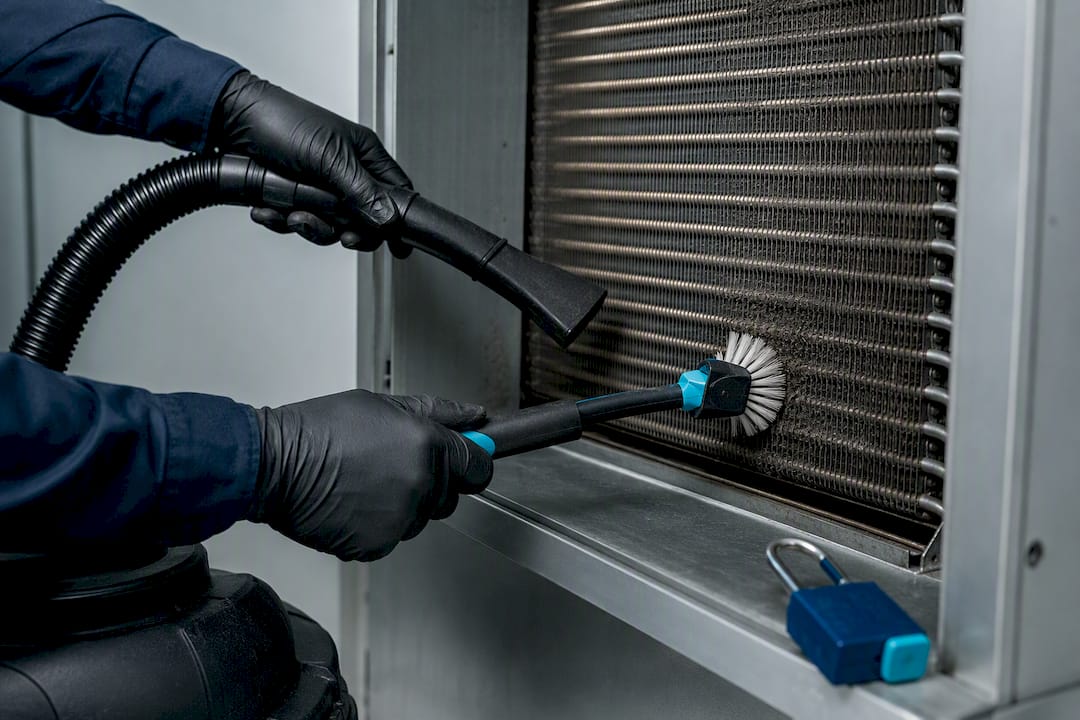
For drain lines, a warm-water flush clears light buildup. For a stubborn clog, compressed air or a flexible pipe cleaner usually does the job without disassembly. Pull the condensate pan, clean it separately, and confirm the unit sits level. A tilted unit drains poorly no matter how clean the line is.
Pro Tip: Keep 2 to 3 inches of clearance around the condenser at all times. If you’re in a grease-heavy kitchen, that clearance rule matters even more, since airflow restrictions compound faster where grease particles are already in the air.
Gasket Care and Door Habits That Prevent Frost and Energy Loss
A failing gasket is the quiet cause behind a surprising share of “why is this unit running constantly” calls. It’s cheap to fix and easy to ignore.
Clean gaskets weekly with mild soap and water, then check for cracks, hardening, or a compression set where the seal no longer springs back to shape. Run the dollar-bill test: close the door on a bill at several points along the seal and see if it slides out freely. If it does, the seal has a gap.
- Replace the gasket when you see tears, permanent flattening, or condensation forming on the frame after every cleaning.
- A temporary silicone seal strip can buy a few days if a replacement gasket is on order.
- Train staff to never prop the door open, minimize open-door time, and shelve product so it doesn’t block the door swing or airflow path.
Troubleshooting: What’s Actually Wrong When the Cooler Acts Up
Most walk-in cooler repair calls fall into three categories. Here’s how to triage each one before deciding whether it’s a five-minute fix or a call to a technician.
Unit isn’t cooling properly. Check the condenser coil for buildup first, since blocked airflow is the most common root cause. Confirm the compressor is actually running (listen for a hum, feel for vibration), verify the thermostat setpoint hasn’t drifted, and check whether the cabinet is overloaded with warm product that’s overwhelming capacity. Frequent door openings in the last hour can also explain a temporary temperature spike that isn’t a real fault.
Ice or frost buildup on walls or evaporator. This almost always points to a door seal issue, a defrost control malfunction, or blocked evaporator airflow from overstocked shelving. Clearing the airflow path and confirming the gasket seals fully often resolves it. If frost returns within a day or two of clearing it, the defrost timer or heater likely needs a technician’s diagnostic.
Water on the floor or slow-draining condensate. Clear the drain line first, check that the unit is level, and inspect the drain pan for cracks or overflow. A one-time puddle after cleaning is normal. A leak that reappears daily means the pan, line, or door seal needs professional attention.
By the Numbers: Industry maintenance guides consistently flag dirty coils and restricted airflow as the leading mechanical cause of compressor strain in commercial refrigeration, ahead of age, refrigerant charge, or electrical wear.
When Do You Need a Licensed Refrigeration Technician?
Some symptoms call for a phone call, not a wrench. Waiting on these usually turns a repair into a replacement.
- Temperature sits above 41°F and won’t recover after an hour with the door closed.
- The compressor clicks repeatedly, trips a breaker, or won’t restart.
- You smell anything electrical or burning near the unit.
- The unit short-cycles constantly, turning on and off in rapid succession.
- Frost returns within a day or two of a full cleaning.
Refrigerant work specifically requires an EPA-certified technician under Section 608 rules. Never attempt to recover, charge, or top off refrigerant yourself, since sealed-system work by unlicensed staff can void a warranty on top of the safety risk.
Before the technician arrives, have the unit’s make, model, and serial number ready, along with your recent temperature log, photos of the symptom, and a quick note on what staff already tried. That single step often cuts diagnostic time in half, because the technician isn’t starting from zero.
How Scheduled Service and Fast Response Cut Downtime
Disciplined in-house checks catch the small stuff. Scheduled professional visits catch what daily logs can’t, like early refrigerant loss or a fan motor starting to fail.
- A documented service report should list what was inspected, what was found, and what action was taken or recommended.
- That paper trail supports warranty claims, insurance questions, and health inspections in one document.
- Tailored maintenance plans matched to your kitchen’s grease load or your fleet’s usage pattern reduce surprise failures compared to a generic annual visit.
- Fast dispatch matters most when a unit fails overnight and product is on the line.
What Actually Protects Uptime Over Time
The operators who avoid emergency calls aren’t the ones doing occasional deep cleans. They’re the ones running short, frequent checks and actually writing them down. A five-minute daily log beats a quarterly scramble every time, because it catches drift before it becomes a failure.
Recordkeeping and staff training are the cheapest insurance you’ll ever buy for a walk-in. Train whoever’s on shift to know what a healthy gasket feels like and what a normal compressor sounds like, and you’ll catch most problems before they cost you product. When something’s outside what a log and a brush can fix, call a technician early. Waiting rarely saves money.
— Vitali
How to Schedule Conexcool for Maintenance or Emergency Repair
Some refrigeration service companies build their dispatch model to address the common problem operators face: knowing something’s wrong but uncertain how quickly help will arrive. Some offer 24/7 technician dispatch in California and coordinate a network for service in other states to minimize downtime.

Conexcool handles both scheduled maintenance plans and emergency refrigeration repair, with hands-on experience across Daikin, Thermo King, and Carrier Transicold equipment. For a service visit, have your temperature logs, unit make and model, and site access ready. Every visit ends with a documented service report outlining what was checked, what was found, and what to watch next, so your compliance file stays current without extra paperwork on your end. If a unit is drifting out of range or you’d rather get ahead of the next quarterly inspection, schedule service with Conexcool now instead of waiting for a breaker to trip at 2 a.m.
Sources
For cold-holding thresholds and documentation standards, see FDA guidance on safe food storage and FSIS refrigeration guidance. Refrigerant leak-repair rules are set by EPA Section 608. For a ready-to-use log, the walk-in maintenance checklist template standardizes daily and monthly records for inspections.
- Are you storing food safely? | FDA
- Stationary refrigeration leak repair requirements | EPA
- Preventative Maintenance for Refrigeration Systems | USCooler